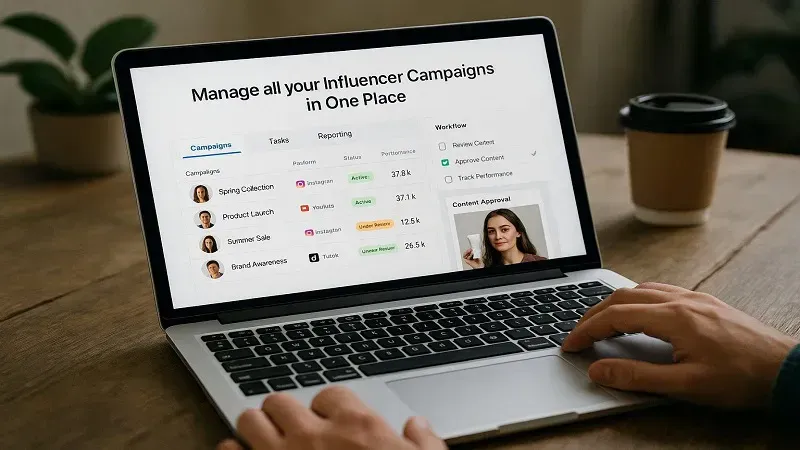
Choosing an influencer marketing platform can be difficult, especially for small businesses that need product exposure without wasting their marketing budget. Tomoson is associated with influencer discovery and campaigns that connect brands with content creators. However, understanding its current services, costs, and limitations is essential before signing up.
This tomoson review examines the platform from a practical perspective. It considers how the service works, what brands and creators should verify, which risks deserve attention, and when another influencer marketing solution may be a better fit. The goal is to help readers make an informed decision rather than rely on promotional claims.
What Is Tomoson?
Tomoson is an online platform associated with influencer marketing and creator campaigns. Its website includes sections for influencers, campaigns, pricing, and platform information. Its published review page describes a model in which brands connect with creators for product-related content and promotional collaborations.
The general idea behind this model is straightforward. A business wants to introduce a product to a relevant audience, while a creator wants opportunities to produce useful content and work with brands. A marketplace can help both parties discover opportunities and coordinate campaign requirements.
However, a platform’s stated purpose does not guarantee that every campaign will produce meaningful engagement or sales. Results depend on the creator’s audience, content quality, product relevance, campaign terms, and the effectiveness of the overall marketing strategy.
A useful tomoson review should therefore distinguish between the service’s intended purpose and the results an individual business might achieve.
How Does Tomoson Work?

Influencer marketplaces generally follow a campaign-based process. Businesses describe their products and campaign goals, while creators review opportunities and decide whether to participate. The parties then establish the expected content, compensation, publication requirements, and deadlines.
The exact workflow and available tools should be confirmed through Tomoson‘s current official documentation before a user commits money or products.
For brands
A business should begin by identifying its primary objective. It might want product awareness, social media content, website visits, creator-generated photographs, or sales through tracked links.
After establishing that objective, the business needs to determine which creators reach the intended audience. A large follower count is not enough. A creator with a smaller, relevant audience may be more useful than someone with many followers who have little interest in the product.
Before approving a collaboration, the brand should establish the required deliverables, publication deadline, compensation, content usage rights, and disclosure expectations. Written terms make it easier to evaluate whether the campaign has met its objectives.
For influencers and bloggers
Creators should evaluate each opportunity as carefully as brands evaluate applicants. A free product or payment may be attractive, but the work involved can include research, photography, writing, editing, and publishing.
Read the campaign requirements before accepting an offer. Check whether the compensation covers the time involved, whether the product must be returned, and whether the brand expects additional promotional work.
Creators should also retain copies of agreements, messages, delivery confirmations, and published content. These records can help resolve disagreements about deadlines or compensation.
Key Features to Evaluate
The most useful way to assess an influencer platform is to look at the capabilities that affect everyday campaign work. The following table identifies what to investigate rather than assuming that every feature is available in Tomoson’s current plans.
| Area | What to check | Why it matters |
|---|---|---|
| Creator discovery | Search filters and niche relevance | Helps identify suitable partners |
| Campaign management | Briefs, deadlines, and deliverables | Keeps projects organized |
| Payment terms | Fees, payment timing, and disputes | Reduces financial uncertainty |
| Performance reporting | Clicks, engagement, and conversions | Helps measure campaign value |
| Content rights | Reuse, licensing, and duration | Clarifies how content can be used |
| Support | Contact channels and response times | Helps resolve campaign problems |
A tomoson review should also assess whether the available reporting matches the business’s needs. Basic campaign tracking may be sufficient for a small experiment, while a larger marketing team may require audience demographics, conversion attribution, exportable reports, and integrations with its online store.
These differences matter because paying for a platform is only one part of the budget. Product samples, shipping, creator fees, staff time, and follow-up work can also affect the final cost.
Potential Benefits for Small Businesses

Influencer marketing can give smaller companies access to creators whose audiences already have an interest in a particular subject. A suitable partnership may introduce a product to potential customers in a more relevant setting than a broad advertising campaign.
A marketplace can also help centralize discovery and communication. Instead of managing every conversation separately, a business may be able to organize applications, campaign details, and deliverables in a shared workflow, depending on the platform’s current functionality.
Another potential advantage is the opportunity to test different content approaches. A business might compare product demonstrations, tutorials, photographs, or educational posts to learn which formats attract its target audience.
Still, these are potential benefits of influencer marketplaces, not a guarantee of Tomoson-specific performance. Brands should confirm which tools are included in the current service and evaluate results from an actual small-scale campaign before expanding their investment.
Limitations and Risks to Consider
No influencer marketplace removes every challenge associated with creator partnerships. Businesses must still evaluate audience quality, content relevance, reliability, and the cost of acquiring customers.
One common risk is choosing creators based mainly on follower counts. Inflated engagement, an audience outside the target market, or low interest in the product can reduce the value of a collaboration. Brands should examine recent posts, meaningful audience interactions, and the relationship between the creator’s content and the product.
Another concern is incomplete campaign delivery. A creator might miss a deadline, while a brand might delay shipping or change its requirements. Clear written agreements, realistic deadlines, and documented communication can reduce these problems.
Payment arrangements deserve particular attention. Before accepting a campaign, determine whether payment depends on approval, publication, performance, or another condition. Confirm the procedure for disputed deliverables and late payments.
The tomoson review process should also account for uncertainty around independent user feedback. Search results and third-party articles can provide useful leads, but individual claims are not automatically verified evidence. Look for recent, specific reports from identifiable sources rather than relying on anonymous comments or repeated statements copied across websites.
Pricing and Value for Money

Platform pricing can change, and a subscription fee rarely represents the entire cost of an influencer campaign. Businesses should consult the official Tomoson website and confirm current pricing, included features, billing frequency, cancellation rules, and any trial conditions before purchasing.
Calculate the complete campaign budget, including creator compensation, product costs, shipping, staff time, and any additional service charges. If several creators are involved, allow for the possibility that not every approved collaboration will produce a usable deliverable.
For example, imagine a business spends $300 on products, shipping, and creator compensation and receives six usable pieces of content. The direct campaign cost per usable piece is $50, before subscription fees and internal labor.
This calculation is an illustrative example, not a reported Tomoson result. Its purpose is to show why businesses should measure completed work rather than simply count approved applicants.
For smaller brands, a platform is worthwhile when it saves enough time or improves campaign results to justify its total cost. For established businesses, stronger reporting and more reliable workflows may justify paying more for a different service.
Is Tomoson Legitimate and Safe to Use?
A platform’s existence does not establish that every offer on it is legitimate or that every transaction will go smoothly. Likewise, a negative review does not prove that the entire service is fraudulent.
Before registering, examine the official terms, privacy policy, contact information, and payment arrangements. Check whether the platform clearly explains how campaign disputes are handled and what protections apply to brands and creators.
Be cautious if a campaign requests unnecessary personal information, asks you to pay unexpected fees, or pressures you to accept unclear terms. Avoid sharing account passwords or sensitive financial information directly with another campaign participant.
Product reviews require special care. In the United States, the Federal Trade Commission provides guidance on endorsements, influencer disclosures, and consumer reviews. If a creator receives payment, a free product, or another benefit in connection with an endorsement, that relationship may need to be clearly disclosed.
Do not agree to fabricate a positive opinion, conceal compensation, or publish a review for a product you have not actually evaluated. Incentivized reviews may also violate the rules of a particular marketplace, even when the creator discloses the incentive.
Alternatives Worth Comparing
Tomoson is not the only possible route to influencer partnerships. The right alternative depends on whether a business needs a creator marketplace, direct outreach, content production, or advanced campaign management.
Afluencer
Afluencer is worth investigating if you want to discover creators and arrange collaborations through a marketplace. Compare its current invitation limits, campaign tools, and total pricing with your requirements.
Intellifluence
Intellifluence is another option for businesses seeking creator partnerships and review-oriented campaigns. Examine its current plan limits and compensation arrangements before deciding whether it suits your budget.
Upfluence
Upfluence is worth comparing if your business needs a broader creator discovery and campaign management workflow. Check its ecommerce integrations, reporting capabilities, contract requirements, and pricing.
These platforms are candidates for comparison, not a verified ranking of the best services. Their current features and terms should be checked directly before making a purchasing decision. A recent independent comparison also discusses these and other alternatives for different campaign needs.
How to Choose the Right Platform

Start with a clear goal. If you want product photographs, focus on content quality and licensing rights. If you want sales, prioritize relevant audiences, tracked links, conversion measurement, and realistic customer acquisition costs.
Next, establish a budget that includes all campaign expenses. Request clarification about fees and contractual commitments before paying. Compare the total cost of two or three suitable platforms instead of choosing solely on subscription price.
Finally, run a small pilot when possible. Work with a limited number of creators, document the results, and assess communication, delivery, content quality, and measurable outcomes. A small test provides more useful evidence about your own needs than a broad claim that a platform works for everyone.
This approach makes a tomoson review more practical because it connects the platform’s potential usefulness to specific business requirements.
Final Verdict
Tomoson may be worth investigating for businesses and creators interested in influencer marketing, but the right decision depends on the current service, campaign terms, pricing, and quality of available partnerships.
The strongest approach is to verify the platform’s current capabilities, review independent feedback carefully, and calculate the full cost of a campaign. Businesses that need simple creator discovery may have different priorities from teams requiring detailed analytics and ecommerce attribution.
Ultimately, choose the service that offers the best balance of relevant creators, transparent terms, dependable delivery, and measurable value. Do not commit to a long-term plan until you understand exactly what you will receive and how success will be measured.
Frequently Asked Questions
What is Tomoson used for?
Tomoson is associated with influencer marketing and creator campaigns. Businesses can investigate its current services to determine whether they support their promotional goals.
Is Tomoson worth trying for a small business?
It may be worth considering if you want to explore creator partnerships without managing every interaction manually. Review the current fees, available creators, and campaign terms before investing.
Is Tomoson free to use?
Pricing and access can differ between brands and creators. Check the official Tomoson website for current plans, trial availability, and any subscription requirements.
How can I evaluate Tomoson before joining?
Start by reading independent feedback, reviewing the official terms, and confirming payment and cancellation policies. A thorough tomoson review should also consider whether the platform’s current features meet your actual campaign needs.
Can influencers receive free products through Tomoson?
Product-based collaborations are associated with influencer marketplaces, but the offers currently available through Tomoson should be verified. Read each campaign’s requirements and determine whether any additional compensation is offered.
What are the alternatives to Tomoson?
Afluencer, Intellifluence, and Upfluence are options to compare. Each has a different approach to creator discovery and campaign management, so check current pricing and functionality before selecting one.
Are incentivized product reviews allowed?
That depends on the platform and marketplace rules involved. In the United States, the FTC requires appropriate disclosures for material connections and prohibits deceptive review practices. Amazon also has its own policies concerning incentivized reviews. Read the applicable rules before participating. See More