
Influencer marketing has become an important way for businesses to introduce products, reach new audiences, and build customer relationships. However, finding suitable creators and managing collaborations can become difficult when a platform does not provide the tools a business needs.
Choosing the right Tomoson alternative depends on what a company wants to achieve. Some businesses need affordable creator discovery, while others require campaign management, audience analysis, product gifting, or detailed performance reports.
Several platforms offer different approaches to influencer marketing. Aspire, Upfluence, GRIN, Modash, Collabstr, Popular Pays, and Heepsy are worth considering. Each serves a different purpose, so comparing their strengths and limitations is more useful than simply choosing the most popular name.
What Is Tomoson and Why Consider Other Platforms?
Tomoson is associated with influencer marketing and product review campaigns. Its marketplace model has helped connect businesses with bloggers and social media creators interested in promotional collaborations.
Businesses can use influencer platforms to identify suitable people, communicate campaign requirements, arrange product collaborations, and review published content. These activities can help companies reach audiences that traditional advertising may not reach as effectively.
However, marketing requirements change as businesses grow. A small online store may initially need a simple way to connect with product reviewers. Later, it might require audience verification, affiliate tracking, automated communication, and more detailed campaign reporting.
This is where another platform may become useful.
A business searching for a Tomoson alternative should first identify the specific problem it wants to solve. Switching platforms without understanding the required features can result in unnecessary subscriptions and complicated workflows.
7 Platforms to Consider for Influencer Marketing

Different influencer marketing services focus on different business requirements. The following options cover creator discovery, content production, campaign management, and direct marketplace hiring.
1. Aspire: Best for Long-Term Creator Relationships
Aspire is designed for brands that want to build ongoing relationships with content creators.
Rather than treating every collaboration as an individual promotional activity, businesses can use creator management workflows to organize repeated partnerships. This approach is particularly useful for ecommerce companies that regularly send products to influencers or run affiliate campaigns.
Aspire is worth considering when a company needs creator discovery, campaign coordination, product seeding, and relationship management in one environment.
Its main limitation is that a more comprehensive platform may be unnecessary for businesses running only one or two small campaigns. Companies should request current pricing and confirm which features are included before making a commitment.
2. Upfluence: Best for Data-Driven Influencer Discovery
Upfluence focuses on helping businesses identify creators through audience and profile information.
Finding an influencer should involve more than checking follower numbers. Businesses need to understand whether a creator’s audience matches their products, location, interests, and potential customers.
Upfluence is useful for brands that want more structured creator searches and ecommerce-related workflows. It can also help businesses identify existing customers who have an influential social media presence.
For example, a clothing company might discover that one of its customers regularly publishes fashion content. That relationship could create an opportunity for a genuine collaboration.
Upfluence is a potential Tomoson alternative for companies that prioritize creator research and data. However, businesses should compare its available integrations, reporting capabilities, and subscription terms before purchasing.
3. GRIN: Best for Managing Large Creator Programs
GRIN is designed for businesses that manage influencer relationships on a larger scale.
When a company works with several creators simultaneously, spreadsheets and separate communication tools can become difficult to manage. GRIN provides a more organized approach to creator relationships and campaign workflows.
Businesses can use its platform to coordinate outreach, gifting, content approvals, and payments. This makes it relevant to brands that want to develop structured influencer programs rather than arrange occasional sponsored posts.
For example, a skincare company working with creators across several product categories may need a central place to organize collaborations and monitor content delivery.
GRIN may offer more functionality than a small business needs. Its suitability depends on campaign volume, available budget, and the amount of management work the company wants to automate.
4. Modash: Best for Creator Research and Audience Analysis
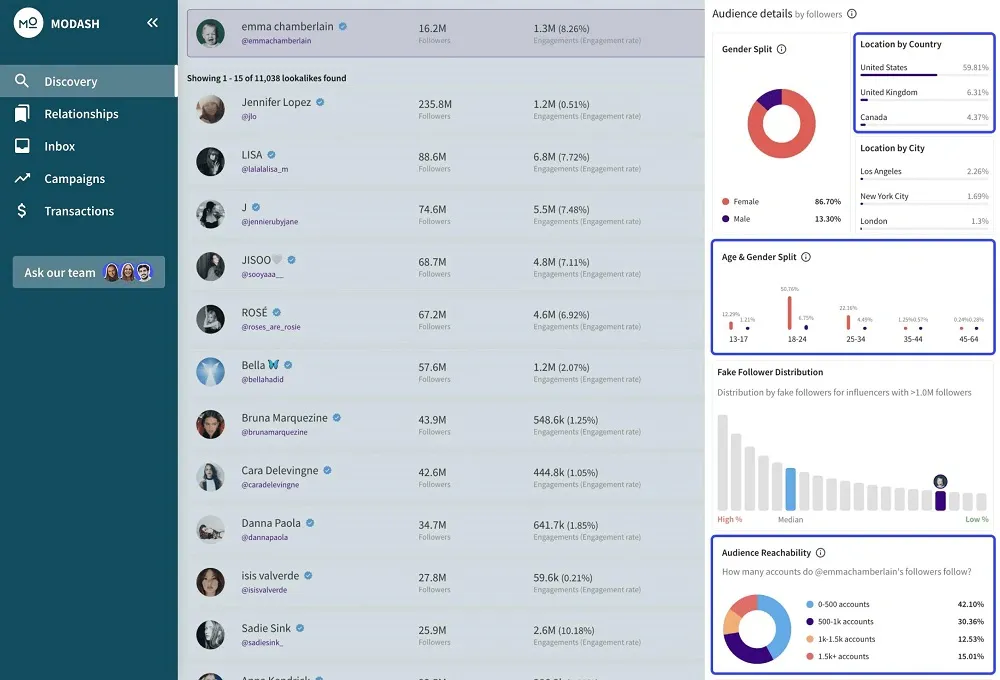
Modash focuses primarily on influencer discovery and analysis.
Businesses can use creator research tools to narrow searches by relevant characteristics, including social media platform, audience location, niche, and follower size.
These filters are helpful because an influencer with a large audience is not necessarily suitable for every campaign. A smaller creator with a relevant audience may offer a better match for a specialized product.
Modash is particularly useful for marketing teams that prefer to research creators themselves and make independent decisions about outreach.
However, discovery and campaign execution are different activities. Businesses should check whether they need additional tools for contracts, creator payments, content approvals, and long-term relationship management.
5. Collabstr: Best for Direct Creator Hiring
Collabstr provides a marketplace where businesses can explore creator profiles and arrange content collaborations.
One useful feature of a marketplace approach is that brands can compare available creators before deciding whom to hire. Depending on the listing, businesses can review content categories, social channels, and offered services.
Collabstr can be suitable for companies that need a particular piece of content rather than a complete influencer management system.
For instance, a small business might want a short product demonstration video for Instagram or TikTok. It can browse relevant creators and compare available packages.
Collabstr is worth evaluating as a Tomoson alternative when straightforward hiring and visible creator offerings are more important than advanced analytics.
Businesses should still confirm transaction fees, content delivery requirements, revisions, and commercial usage rights before placing an order.
6. Popular Pays: Best for Branded Content and UGC
Popular Pays is another option for businesses interested in branded content and user-generated content.
User-generated content, commonly called UGC, refers to content created by customers or independent creators that features a product, service, or experience.
Brands can use this type of content across social media channels, websites, and advertising campaigns, provided they have the necessary permissions.
Popular Pays is worth researching when the main objective is to obtain useful creative assets rather than simply increase influencer reach.
A company launching a new household product, for example, might need demonstration videos and lifestyle photographs that explain how the product works.
Before choosing a campaign, brands should clarify the expected deliverables, content ownership, advertising permissions, revision policies, and publishing requirements.
7. Heepsy: Best for Finding Micro-Influencers
Heepsy is a creator discovery platform that can help businesses find influencers according to specific search criteria.
Micro-influencers can be particularly relevant to businesses targeting smaller communities or specialized interests. Their audiences may be more closely connected to a particular subject, location, or product category.
Heepsy offers a practical starting point for companies that want to research creators before contacting them directly.
For example, a local food business might search for creators who regularly publish restaurant reviews and lifestyle content in its target area.
However, businesses should remember that discovering an influencer does not automatically guarantee a successful partnership. They still need to review audience quality, engagement patterns, communication, and campaign suitability.
Quick Comparison of the Seven Platforms
The following table summarizes the main purpose of each service.
| Platform | Main strength | Suitable for |
|---|---|---|
| Aspire | Relationship management | Ecommerce brands |
| Upfluence | Creator research | Data-focused teams |
| GRIN | Campaign workflows | Growing brands |
| Modash | Discovery and analytics | Creator research |
| Collabstr | Direct hiring | Small campaigns |
| Popular Pays | UGC production | Content-focused brands |
| Heepsy | Influencer search | Smaller businesses |
These platforms should not be treated as identical products. Some concentrate on discovering creators, while others provide broader campaign management or content production services.
Pricing also differs. Some providers publish entry-level plans, while others require businesses to request a quotation. Subscription prices, transaction fees, and available features can change, so current vendor information should be checked before purchasing.
How to Choose the Right Influencer Marketing Platform

Selecting suitable software starts with understanding the business objective.
A company focused on product reviews may need a platform with product seeding and creator applications. Another business might prioritize finding influencers with specific audience characteristics.
Before making a decision, businesses should consider their campaign requirements, available resources, and expected results.
Identify Your Campaign Goals
Start by deciding what success means for the campaign. Possible objectives include increasing brand awareness, generating product reviews, creating social media content, improving website traffic, or generating sales.
Each objective requires different tools and performance measurements.
For example, a brand awareness campaign may prioritize reach and relevant audience exposure. A sales campaign should place more emphasis on tracked conversions and revenue.
Compare Pricing and Additional Costs
A subscription fee does not always represent the complete campaign cost.
Businesses may also need to pay creator fees, product shipping expenses, marketplace charges, and additional costs for advertising rights.
A lower-priced platform is not necessarily the most economical option if it requires several additional services to complete the same task.
Compare the total expected cost instead of focusing only on the advertised monthly price.
Examine Creator Quality
Follower numbers alone cannot establish whether an influencer is suitable.
Review audience location, engagement quality, content consistency, previous partnerships, and relevance to the product category.
Businesses should also check for suspicious engagement patterns and unusually repetitive comments.
Check Campaign Management Features
A useful platform should support the activities required by the business.
These may include creator communication, campaign briefs, deadlines, product delivery, content approvals, reporting, and payment management.
A company managing multiple collaborations should prioritize organization and workflow efficiency.
Test Before Making a Long-Term Commitment
Whenever possible, request a demonstration or use an available trial.
Run a small campaign with a limited number of creators. Evaluate the time required to find suitable people, the quality of responses, the usefulness of reporting, and the overall campaign expense.
This approach provides practical information that a feature comparison alone cannot offer.
Which Platform Is Best for Different Business Needs?
There is no single platform that works equally well for every business.
A small online store may benefit from a simple creator marketplace, while an established ecommerce company may need a complete system for managing long-term relationships.
The best Tomoson alternative for a particular company is the one that solves its actual marketing problem without adding unnecessary expenses.
Businesses looking for direct creator hiring can begin by examining Collabstr. Companies interested in creator research can compare Modash and Heepsy. Brands managing larger campaigns may find Aspire or GRIN more relevant.
Upfluence is worth considering when data-driven discovery is important, while Popular Pays is a useful option to investigate for content production.
The decision should be based on the complete workflow, not just the number of features advertised by a provider.
Common Mistakes to Avoid When Switching Platforms
Changing influencer marketing software can create problems if businesses focus only on finding a replacement.
One common mistake is selecting a platform because it offers many features. More features do not necessarily produce better campaign results. A company that needs only a few product reviews may not benefit from an expensive enterprise system.
Another mistake is judging influencers exclusively by their follower counts. Audience relevance, content quality, and genuine engagement are often more useful indicators when evaluating potential partners.
Businesses should also avoid overlooking content usage rights. Receiving a video from a creator does not automatically mean the brand can use it in every advertisement or marketing channel. These permissions should be agreed upon in writing.
Finally, companies should review cancellation terms, data export options, payment arrangements, and customer support before signing a long-term contract.
How to Measure the Results of an Influencer Campaign
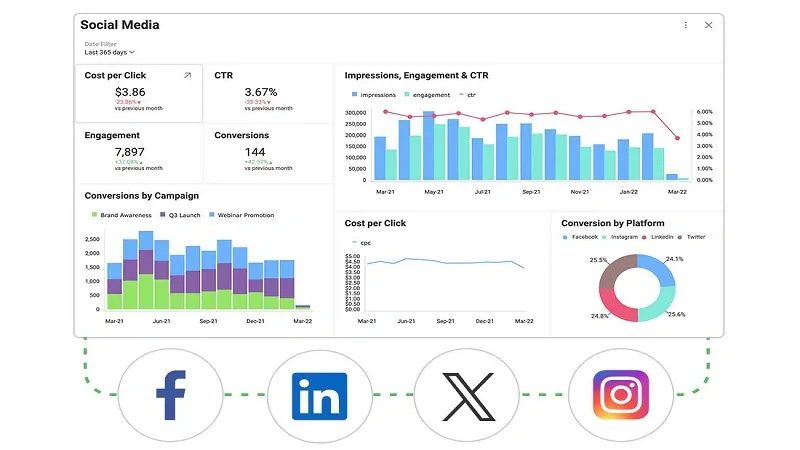
Choosing software is only one part of influencer marketing. Businesses also need a reliable method for evaluating campaign performance.
The right measurements depend on the original objective.
For awareness campaigns, useful measurements include reach, impressions, video views, and audience engagement. For website traffic campaigns, businesses can examine referral visits and link clicks.
Sales-focused campaigns require additional tracking. Unique discount codes, affiliate links, and website analytics can help businesses understand which partnerships generate purchases.
Content quality should also be evaluated. A video that explains a product clearly may have lasting value even when its immediate engagement numbers are modest.
Businesses should establish their measurement criteria before launching a campaign. This makes it easier to compare creators and decide whether future collaborations deserve additional investment.
Final Thoughts
Influencer marketing software can make creator discovery, communication, and campaign organization easier. However, the right choice depends on the size of the business, its budget, and the type of collaboration it wants to develop.
Aspire, Upfluence, GRIN, Modash, Collabstr, Popular Pays, and Heepsy provide different approaches to creator marketing. Comparing their actual capabilities, costs, and limitations can help businesses make more informed decisions.
Before committing to a new platform, define the campaign objective, test the available features, and evaluate the quality of the results. A carefully selected tool should simplify marketing activities and support measurable business goals rather than create additional complexity.
Frequently Asked Questions
What is an influencer marketing platform?
An influencer marketing platform is a digital service that helps businesses discover content creators, organize partnerships, manage campaigns, and evaluate promotional results.
Which platform is suitable for small businesses?
Collabstr and Heepsy are worth investigating for smaller businesses. The better choice depends on whether the company needs direct creator hiring or influencer discovery.
Is Modash suitable for influencer discovery?
Yes. Modash focuses on creator discovery and audience analysis, helping businesses research potential influencers before starting collaborations.
What is the difference between influencer marketing and UGC?
Influencer marketing usually involves creators publishing content to their own audiences. UGC focuses on creating content featuring a brand or product, which businesses may use on their own marketing channels with appropriate permissions.
Why should businesses compare influencer platforms?
Comparing platforms helps businesses understand pricing, available features, creator quality, campaign management, and reporting capabilities before purchasing a subscription.
Are expensive influencer platforms always better?
No. An expensive platform may offer advanced features that a small business does not need. Businesses should compare the total cost with their actual campaign requirements.
How can businesses evaluate influencer performance?
Businesses can measure engagement, audience reach, referral traffic, conversions, sales, and content quality. The most useful measurements depend on the campaign objective. See More